

GUÍA DE TURISMO MADRID
What to see, what to do, and Madrid’s must-sees
Everything you need to plan your trip—and make the most of Madrid.

Must-sees / Practical tips / Local ideas / Must-sees / Practical tips / Local ideas / Must-sees / Practical tips / Local ideas / Must-sees / Practical tips / Local ideas / Must-sees / Practical tips / Local ideas /
Must-sees / Practical tips / Local ideas / Must-sees / Practical tips / Local ideas / Must-sees / Practical tips / Local ideas / Must-sees / Practical tips / Local ideas / Must-sees / Practical tips / Local ideas /
In this guide you’ll find


Start your Madrid experience—don’t miss a thing.
Download the Madrid Travel Guide!
TRAVELER TIP
Many visitors start their trip with a panoramic view of Madrid to get their bearings and decide which areas to explore at a slower pace afterwards.
Book your
Yellow Tours panoramic tour now
Enjoy Madrid and have a great trip!
The Yellow Tours team
FIND US

Madrid Travel & Tourism Guide:
What to see, what to do, and how to enjoy the capital
Madrid Tourism: a city that has it all
Madrid is a vibrant, welcoming capital full of contrasts. It brings together history, art, food, nightlife, and neighbourhoods with a character all their own, making it one of Europe’s most complete city-break destinations. Whether it’s your first visit or you already know the city, there’s always something new to discover in Madrid.
For first-time visitors, Yellow Tours is a great way to experience Madrid. From the top deck of a comfortable panoramic coach, you’ll enjoy outstanding views as you take in the main sights on a guided 1 loop around the city. It’s a great way to get a clear first impression, spot the must-sees, and plan the rest of your trip.
26 must-see places to visit in Madrid
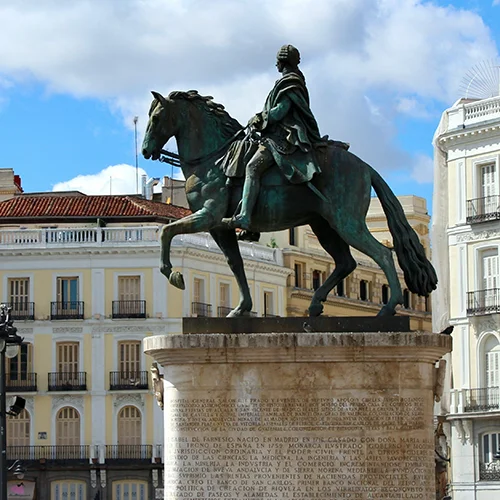
1. Puerta del Sol
Puerta del Sol is one of Madrid’s most iconic squares and home to Kilometre Zero—the marker from which distances across Spain are measured. That symbolic starting point, and the square’s central location, have made it a backdrop to key moments in Spain’s recent history. Today it remains one of the city’s main meeting points for locals and visitors alike.
For many travellers, Puerta del Sol is their first real contact with Madrid. Its atmosphere shifts throughout the day—street performers, long-standing shops, and landmark buildings such as the Real Casa de Correos, whose clock marks the New Year’s Eve countdown. You’ll also find two of the city’s best-known symbols here: the Bear and the Madroño (strawberry tree), Madrid’s official symbol.
From here, several of the main streets in the city centre radiate out, making it an ideal place to get your bearings and start exploring. It also links easily to nearby highlights like Plaza Mayor and Gran Vía. Puerta del Sol isn’t just somewhere to see in Madrid—it’s an experience that captures the city’s pace, energy, and character.
2. Plaza Mayor
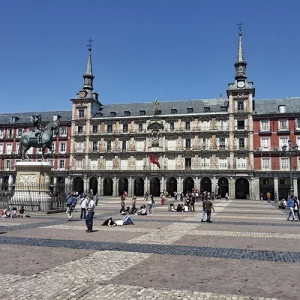
Plaza Mayor is one of the historic spaces that define Madrid and a must-see on any Madrid travel guide. Built in the 17th century, it stands out for its arcaded walkways, rectangular layout, and the harmonious façades that create a distinctive atmosphere right in the heart of the city.
Over the centuries, the square has hosted markets, popular celebrations, official events, and also some dark episodes in the city’s past. Today it feels lively and welcoming—ideal for a stroll, a coffee on a terrace, or simply watching Madrid go by. At the plaza’s centre stands the equestrian statue of Philip III, presiding over this classic urban landmark.
Plaza Mayor is key to understanding Madrid’s long-standing role as a social and commercial hub. Beneath the arcades you’ll find traditional restaurants and specialist shops—some focused on classic Madrid treats and local produce. At certain times of year, especially at Christmas, the square takes on an even more memorable atmosphere.
Its location near other key points in the old town makes it a must for anyone who wants to take in the city’s highlights and enjoy a more traditional side of Madrid.
3. Royal Palace of Madrid
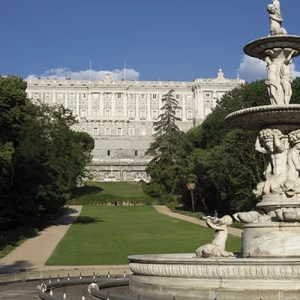
The Royal Palace of Madrid is one of the largest palaces in Western Europe and one of the city’s most important historic symbols. Although it’s no longer the royal family’s main residence, it still hosts official ceremonies and state events, keeping its institutional role firmly in place.
Its imposing façade and setting beside Plaza de Oriente create one of Madrid’s most spectacular monumental sights. Inside, visitors can discover sumptuous staterooms, art collections, tapestries, historic clocks, and the Royal Armoury, considered one of the most important in the world.
Visiting the palace is a direct way to understand the history of the Spanish monarchy and Madrid’s role as the capital of the kingdom. The gardens around the palace, including the Sabatini Gardens, also offer a pleasant place to stroll and enjoy privileged views.
This landmark brings together art, history, and architecture in a single place, making it an essential stop on any Madrid itinerary and one of the most highly regarded visits among international travellers.
4. Gran Vía
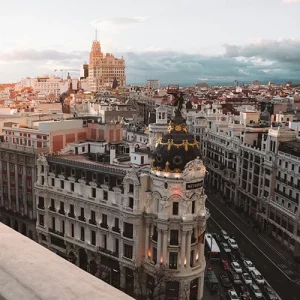
Gran Vía is Madrid’s best-known avenue and one of the main arteries of city life. Often compared to Broadway, it stands out for its constant mix of culture, shopping, and entertainment. Since it was built in the early 20th century, it has become one of the defining symbols of modern Madrid.
When you visit Madrid, a walk along Gran Vía reveals a succession of landmark buildings, theatres, cinemas, and flagship stores. Its architecture blends styles such as Art Deco and rationalism, creating a cityscape with a very distinctive look. It’s lively from morning to late at night, with a steady stream of shows and things to do.
Gran Vía connects many of the city centre’s main landmarks, making it a key route for getting around the city. It’s also one of the best places to soak up Madrid’s energy and watch the mix of people who pass through the capital.
Gran Vía captures Madrid at its most dynamic and cosmopolitan, making it a must-see for anyone who wants to experience the city’s more contemporary side.
5. El Retiro Park
El Retiro Park is Madrid’s main green oasis and one of the city’s best-loved places among locals and visitors alike. As a UNESCO World Heritage Site,El Retiro is an ideal spot to rest and unwind from the city’s pace—without leaving the centre.
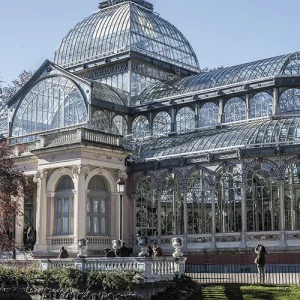
El Retiro is perfect for a stroll, a break in the shade, or exploring its many iconic corners. The Large Pond, where you can rent a rowboat, and the Crystal Palace, one of Madrid’s most photographed landmarks, are among its highlights.
Once closely linked to the royal family, the park has gradually become a public space that forms part of everyday life in Madrid. Its size makes it easy to find quiet areas, well-kept gardens, and cultural spaces.
El Retiro adds a welcome dose of nature to any Madrid visit and is a must-see for anyone looking for a more relaxed experience during their stay in the capital.
6. Prado Museum
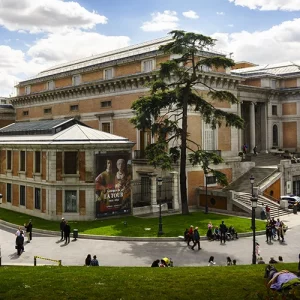
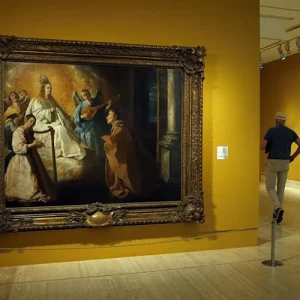
The Prado Museum is one of the world’s leading art galleries and a true reference point in the international art world. Its collection includes masterpieces by artists such as Velázquez, Goya, Bosch, Rubens, and Titian, making it a must-see when you visit Madrid.
Located on the Paseo del Prado, the museum takes you through the history of European art, with Spanish painting taking centre stage. Each room offers a different experience—whether you’re a specialist or visiting a major museum for the first time.
The Prado is remarkable not only for the quality of its works, but also for the central role it plays in Madrid’s cultural identity. Its setting near El Retiro and other renowned museums reinforces its place within Madrid’s Golden Triangle of Art.
For anyone planning a Madrid itinerary, the Prado is an essential stop that adds real cultural depth and makes a city visit even more rewarding.
7. Reina Sofía Museum
The Reina Sofía Museum is one of Spain’s leading centres for contemporary art and an essential stop when you visit Madrid. Housed in the former Hospital of San Carlos, it holds one of the country’s most important collections of modern and contemporary art, with a special focus on 20th-century Spanish artists.
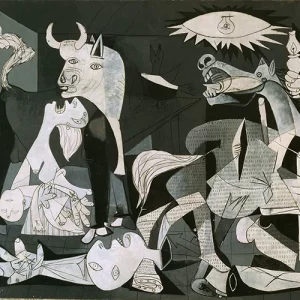
Its most iconic work is Picasso’s Guernica—a universal masterpiece that draws visitors from around the world and makes the museum a key part of Madrid’s cultural offering. Alongside it, the collection includes works by Salvador Dalí, Joan Miró, and Juan Gris, offering a rich view of some of the most influential artistic movements of the last century.
The Reina Sofía is not only a museum, but also an active cultural centre, with temporary exhibitions, educational programmes, and events linked to contemporary art and thought. Its location near the Paseo del Prado and El Retiro makes it easy to include in a wider cultural route through the city.
For anyone who wants to understand more recent artistic developments—and Madrid’s role as a cultural capital—the Reina Sofía is a must-see, offering a different and complementary perspective to the city’s classic art.
8. Thyssen-Bornemisza Museum
The Thyssen-Bornemisza Museum completes Madrid’s Golden Triangle of Art, alongside the Prado and the Reina Sofía. A private collection turned public museum, it offers an exceptional journey through Western painting from the 13th to the 20th century.
The Thyssen stands out for how accessible it feels and for the breadth of its collection. You’ll find works from the Renaissance, the Baroque, Impressionism, and the early avant-gardes, making it ideal for both art lovers and first-time museum visitors.
One of its great strengths is the clarity and coherence of the route, which makes it easy to follow the evolution of painting in a structured, chronological way. Set on the Paseo del Prado, opposite the Royal Botanical Garden, it enjoys a truly privileged location.
The Thyssen brings balance and variety to Madrid’s museum offering. It’s highly recommended for anyone looking for a well-rounded view of European art and a quieter, more didactic museum experience.
9. Cibeles Square
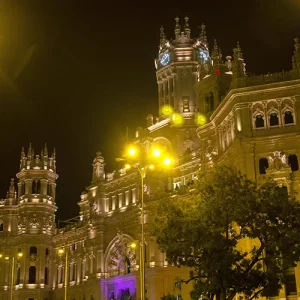
Plaza de Cibeles is one of Madrid’s great visual icons and one of the city’s most recognisable landmarks. At its centre stands the famous Cibeles Fountain, a symbol of Real Madrid and of the capital, and the square links several of the main avenues in the city centre.
Surrounded by monumental buildings such as the Palacio de Cibeles, the Bank of Spain, and the Palacio de Linares, Cibeles reflects Madrid’s more institutional and elegant side. It’s one of the city’s most photographed spots and a key point on many panoramic routes.
Cibeles is also an excellent place to admire the monumental architecture of the late 19th and early 20th centuries. Its proximity to the Paseo del Prado and Gran Vía makes it an easy and strategic stop on almost any itinerary.
By day or illuminated at night, Plaza de Cibeles offers one of Madrid’s most iconic scenes and captures the meeting point of history, modernity, and city life.
10. Puerta de Alcalá
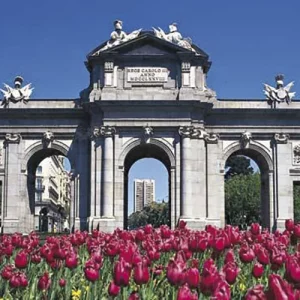
The Puerta de Alcalá is one of Madrid’s oldest and most iconic monuments. Built in the 18th century by order of Charles III, it was once one of the city’s main gates and is now one of its great historic symbols.
Set beside the entrance to Retiro Park, this impressive neoclassical arch has become one of the city’s most recognisable images. Its position in a large roundabout means you can admire it from several angles, making it especially popular for photos.
When visiting Madrid, the Puerta de Alcalá reflects the city’s monumental past and its urban evolution. It’s often included on panoramic tours and sightseeing routes for its historical importance and visual impact.
Its proximity to other major landmarks also makes it an essential stop for understanding Madrid’s transformation into a great European capital.
11. Temple of Debod
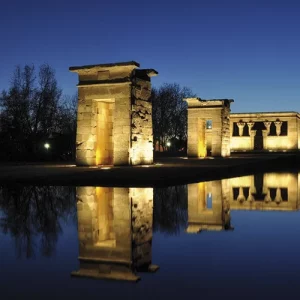
The Temple of Debod is one of Madrid’s most unusual sights. It’s an authentic Egyptian temple, donated to Spain and rebuilt stone by stone in Madrid as a thank-you for Spain’s help in preserving monuments in Egypt.
Set in a park near Plaza de España, the Temple of Debod has sweeping views over the western side of the city and is especially famous for its sunsets. It’s a place where history, culture, and landscape come together in a single visit.
The gardens around it are ideal for a quiet walk, well away from the city centre’s rush. At certain times, you can also go inside, offering a closer look at ancient Egyptian civilisation.
It’s a strong reminder of Madrid’s cultural range, and one of the city’s most memorable spots for visitors.
12. La Latina Neighbourhood
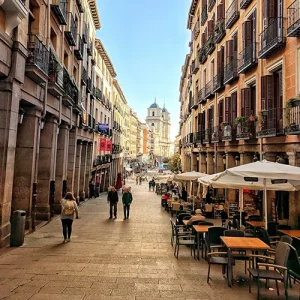
La Latina shows Madrid at its most traditional. Narrow streets, lively squares, and historic bars make it one of the city’s most authentic neighbourhoods.
It’s best known for its food scene, with plenty of tapas and classic Madrid dishes. On Sundays and public holidays, it gets even busier thanks to the nearby El Rastro market.
The area still has strong ties to Madrid’s medieval past and keeps a down-to-earth feel that contrasts with more modern districts. A walk through La Latina reveals charming squares and pockets of everyday local life.
If you want Madrid at its most social and genuine, La Latina is a must—mixing tradition, great food, and a distinct atmosphere.
13. Malasaña Neighbourhood
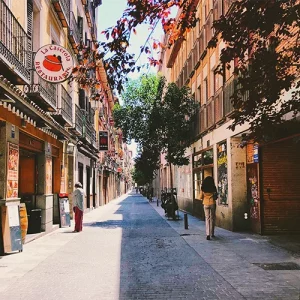
Malasaña is one of Madrid’s most creative, youthful neighbourhoods, with a distinctly alternative edge. Often described as the birthplace of the 1980s Movida Madrileña, it captures one of the city’s more rebellious, culture-driven sides. Malasaña feels bohemian, lively, and always in motion.
The streets are lined with small independent shops, vintage stores, street-art galleries, and cafés with plenty of personality. In the daytime it’s ideal for aimless wandering and small discoveries; at night it becomes one of Madrid’s nightlife centres, with bars and live-music venues.
Historic façades sit alongside a laid-back, modern, slightly raw style, which is part of what makes Malasaña so photogenic. It’s also close to Gran Vía, so it fits easily into a walking route through central Madrid.
For travellers who want to see a more contemporary, creative Madrid—away from the classic checklist—Malasaña is essential, full of character and urban energy.
14. Chueca Neighbourhood
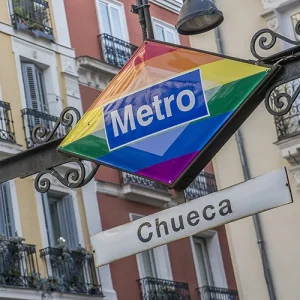
Chueca is one of Madrid’s most dynamic and cosmopolitan neighbourhoods. Internationally recognised for its open, diverse character, it’s a symbol of modern Madrid. Chueca stands out for its inclusive atmosphere, its food scene, and its lively social life.
Its streets bring together innovative restaurants, designer shops, busy terraces, and nightlife venues that draw both locals and visitors. By day, the neighbourhood invites you to stroll and browse; by night, it becomes one of the liveliest parts of the city centre.
Chueca has undergone a remarkable urban transformation, combining traditional buildings with modern, well-kept spaces. Its central location also makes it easy to reach other major sights around Madrid.
15. Lavapiés Neighbourhood
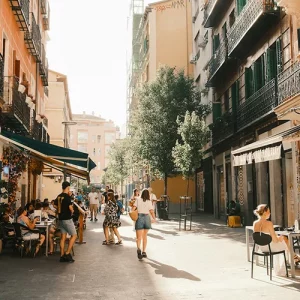
Lavapiés is one of Madrid’s most authentic and multicultural neighbourhoods. It reflects the city’s cultural diversity and offers a different perspective on Madrid—closer, more everyday, and more real. Lavapiés stands out for its mix of traditions, cultures, and artistic expression.
Its streets are home to a wide range of international restaurants, cultural centres, and alternative spaces. The neighbourhood is closely linked to contemporary art and cultural initiatives, with independent theatres and emerging galleries.
Lavapiés keeps a strong, down-to-earth character, with lively squares and a real neighbourhood feel. Its proximity to museums such as the Reina Sofía makes it an ideal addition to a cultural route.
For anyone looking to discover a less touristic but highly representative side of the city, Lavapiés is key to understanding today’s Madrid: diverse and constantly evolving.
16. San Miguel Market
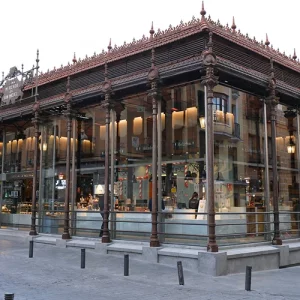
The Mercado de San Miguel is one of Madrid’s best-known food markets. A stone’s throw from Plaza Mayor, it blends the feel of a traditional market with a modern, gourmet selection. When you’re in Madrid, it’s an easy stop for tasting local food in a relaxed, informal setting.
Inside, you can sample tapas, fresh produce, wines, and specialities from across Spain. The iron-and-glass hall is bright and airy, with natural light flooding the space.
The Mercado de San Miguel is ideal for a short visit—either for an aperitivo or as part of a walk through the historic centre. Its central location makes it easy to work into almost any itinerary./strong>.
17. Santiago Bernabéu Stadium
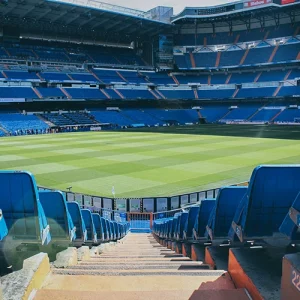
The Santiago Bernabéu is one of world football’s great arenas and a must for sports fans. Home to Real Madrid, it’s one of the city’s most recognisable sporting icons.
A visit to the Bernabéu lets you explore the history of one of the most decorated clubs in the world. Tours take in the main highlights, including the museum, the stands, and other key areas of the stadium.
Set on one of Madrid’s main avenues, it’s easy to reach. A recent redesign has also strengthened its place as a striking modern venue.
Even if you’re not a devoted football follower, the Santiago Bernabéu offers a distinctive sporting and cultural experience—part of Madrid’s identity.
18. Metropolitano Stadium
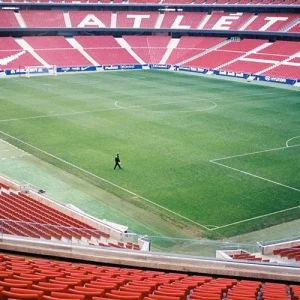
The Metropolitano is one of Europe’s most modern sports venues and the home of Atlético de Madrid—Madrid’s clearest example of football in a contemporary setting.
It stands out for its bold architecture, large capacity, and up-to-date facilities. Tours cover the club’s history and take you through major areas of the venue.
Located in the east of the city, it’s easy to reach by public transport and feels very different from matches in older, historic stadiums.
The Metropolitano reflects Madrid’s growth as a major sporting capital and is a strong pick for anyone interested in sport and modern architecture.
19. El Rastro
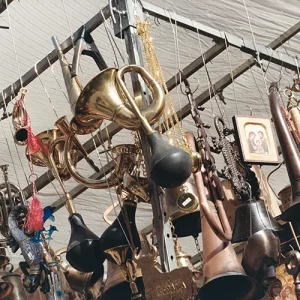
El Rastro is Madrid’s renowned flea market and one of the oldest in Europe. Held every Sunday and on public holidays in La Latina, it’s a great way to soak up the city’s most down-to-earth, authentic side.
The surrounding streets fill with stalls selling antiques, clothes, books, vinyl records, and all sorts of curious finds. Beyond shopping, El Rastro is a social event in its own right, with lively bars and terraces all around, and it’s common to follow your visit with an aperitivo nearby.
El Rastro reflects Madrid’s diversity and open character. As you wander between the stalls, you’ll come across historic corners and see everyday city life up close—an experience well beyond the traditional sightseeing circuit.
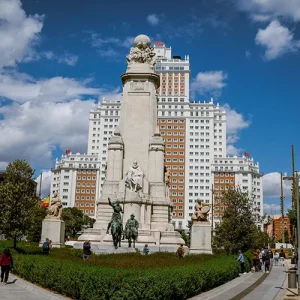
20. Plaza de España
Plaza de España is one of central Madrid’s key public spaces. After its recent renovation, it’s become a spacious, largely pedestrian square linking Gran Vía to the Royal Palace area.
The plaza is known for the Cervantes monument and for the landmark buildings that shape Madrid’s skyline. It’s an easy place to stroll, sit for a while, and take in the city.
Plaza de España reflects the renewal of central Madrid and its move towards more open, accessible public spaces. It’s a regular stop on panoramic tours and walking routes.
21. Madrid Río
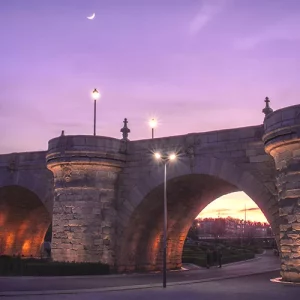
Madrid Río is one of the city’s most important urban projects of recent decades. This green corridor follows the Manzanares River and has turned what was once a car-dominated area into a modern, accessible public space.
When visiting Madrid, it’s ideal for walking, exercising, or simply spending time outdoors. Bridges, playgrounds, and viewpoints make it a lively, family-friendly place.
The park links several neighbourhoods and offers a fresh perspective on landmarks such as the Segovia Bridge and the Royal Palace. It also showcases a more modern, sustainable side of the city.
22. Círculo de Bellas Artes
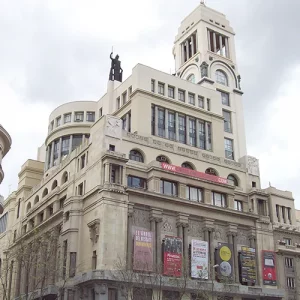
The Círculo de Bellas Artes is one of Madrid’s key cultural centres. It hosts exhibitions, talks, and arts programming—and it’s also home to a rooftop terrace that’s become a city classic.
A visit to the terrace rewards you with wide views over Gran Vía, the historic centre, and Madrid’s rooftops stretching out below. It’s a favourite with locals and visitors alike.
The building itself is a landmark of Madrid’s cultural and architectural scene. In one stop, the Círculo de Bellas Artes combines art, culture, and a standout viewpoint.
23. Royal Botanical Garden of Madrid
The Royal Botanical Garden of Madrid is a quiet oasis beside the Paseo del Prado. It is home to thousands of plant species and offers a carefully laid-out, educational route through plant diversity.
When visiting Madrid, it’s an ideal place for a calm break between museums. Its orderly paths, greenhouses, and botanical collections create a serene, informative setting.
Founded in the 18th century, the garden forms part of the city’s scientific and cultural heritage. It’s a great choice for anyone looking for nature and quiet in the middle of Madrid.

24. Monastery of Las Descalzas Reales
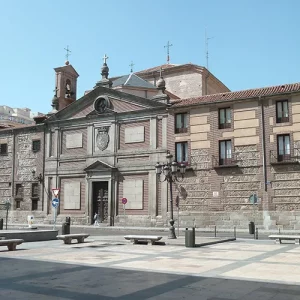
The Monastery of Las Descalzas Reales is one of Madrid’s lesser-known historical treasures. Just near Puerta del Sol, it holds an impressive collection of sacred art and tapestries.
A visit offers a glimpse into the religious and courtly life of earlier centuries. Its rooms preserve works of remarkable historical and artistic value, many of them connected to Spanish royalty.
It’s a different kind of cultural stop—more intimate, and quietly surprising. Las Descalzas Reales brings real historical depth and a welcome contrast to Madrid’s more crowded sights.
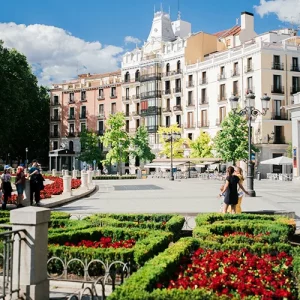
25. Plaza de Oriente
Plaza de Oriente is one of Madrid’s most elegant, monumental squares. Set between the Royal Palace and the Teatro Real, it has a formal, dignified atmosphere.
The square is known for its well-kept gardens and its series of statues of Spain’s kings. It’s a quiet place for a stroll and for taking in the surrounding architecture. Thanks to its location, it’s an ideal point for combining the Royal Palace, the opera house, and other nearby cultural sights..
26. Teatro Real
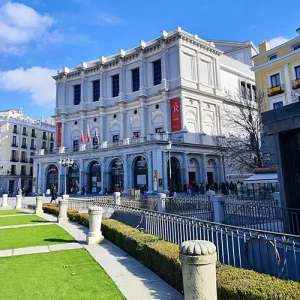
The Teatro Real is Madrid’s main opera house and an internationally renowned cultural landmark. Opposite the Royal Palace, it reflects the city’s long musical and artistic tradition.
When visiting Madrid, you can attend operas and concerts, or take a guided tour to explore the building and its history. Its programme draws audiences from Spain and abroad.
The Teatro Real stands for cultural excellence and underlines Madrid’s role as a major European artistic capital.
Madrid: A Destination That Always Surprises
Madrid offers a perfect mix of culture, things to do, history, and food. Whether it’s your first visit or you’re coming back, there’s always something new to discover.
Plan your trip, choose your routes well, and experience Madrid like a local.
If you want to explore the city in a comfortable, original way, choose guided tours, organised tours, or personalised experiences. Madrid awaits.
Start your Madrid experience with great views and a clear overview.